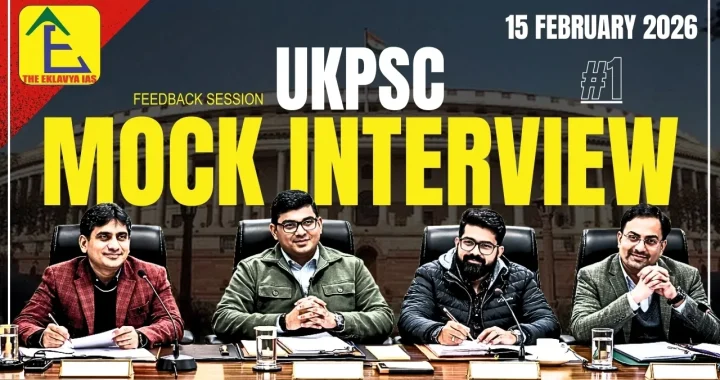
Best strategy for ukpsc interview
Why Avoiding Mistakes Matters More Than Adding Knowledge
The PCS interview stage is not a knowledge competition—it is a personality assessment. By the time candidates reach this level, most already possess sufficient academic understanding. However, many fail due to repeated behavioural, communication, and strategic errors.
This is why mock interviews are crucial. They help identify weaknesses before the final board interaction. Whether you are preparing through UKPSC online coaching or attending classroom sessions, understanding mistakes is the first step toward improvement.
If aspirants truly want to follow the best strategy for UKPSC interview, they must focus on correcting errors rather than accumulating more facts. Serious preparation through UKPSC Upper PCS coaching ensures structured guidance and personality refinement.
Section 1: Preparation Mistakes
Current topic for UK PCS mock: Why do candidates make preparation mistakes despite clearing written examinations?
Clearing Prelims and Mains does not automatically ensure interview readiness. Written exams test knowledge; interviews test personality, clarity of thought, and administrative orientation.
Candidates often neglect self-analysis and articulation practice. The best strategy for UKPSC interview involves structured answer practice, opinion building, and mock-based feedback.
Current topic for UK PCS mock: What is the biggest preparation mistake before mock interviews?
Ignoring the Detailed Application Form (DAF).
Many candidates focus only on current affairs while neglecting personal background questions. Every detail in the DAF can become a discussion topic. Quality UKPSC online coaching programs emphasize DAF mastery as a core component.

Section 2: Content-Related Mistakes
Current topic for UK PCS mock: Why is fact-overloading a mistake?
Interview boards expect clarity and analysis—not data dumping. Overloading answers with statistics reduces structure and impact.
Balanced responses demonstrate maturity, which is essential in UKPSC Upper PCS coaching training modules.
Current topic for UK PCS mock: Why are extreme opinions dangerous?
Civil servants must work with diverse perspectives. Rigid or emotionally biased opinions reflect administrative immaturity. The best strategy for UKPSC interview is presenting balanced and practical viewpoints.
Section 3: Communication Mistakes
Current topic for UK PCS mock: How does poor communication reduce performance?
Knowledge without articulation fails in interviews. Speaking too fast, using complicated language, or giving unstructured responses weakens performance.
Professional UKPSC online coaching programs train candidates in clarity, tone modulation, and structured answering.
Current topic for UK PCS mock: Why is interrupting panel members a serious error?
Interrupting shows impatience and poor listening skills. Administrative roles demand attentive listening and respectful dialogue.
Section 4: Behavioural Mistakes
Current topic for UK PCS mock: Why is defensive behaviour harmful?
Candidates sometimes justify every answer aggressively instead of accepting improvement areas. Defensive behaviour reflects ego and resistance to feedback—undesirable traits in public service.
Current topic for UK PCS mock: How does overconfidence affect performance?
Overconfidence leads to careless responses and casual preparation. Interview boards prefer confidence combined with humility. This balance is a key focus area in UKPSC Upper PCS coaching programs.
Section 5: DAF-Based Mistakes
Current topic for UK PCS mock: What mistakes occur in DAF-based questions?
Rehearsed or superficial answers lack authenticity. Panels can easily detect artificial responses.
Strong DAF preparation is central to the best strategy for UKPSC interview.
Current topic for UK PCS mock: Why is exaggerating achievements risky?
Exaggeration leads to cross-questions that expose inconsistencies. Honesty builds credibility—an essential quality in civil services.
Section 6: Uttarakhand-Specific Preparation Mistakes
Current topic for UK PCS mock: Why do candidates underestimate state-specific issues?
Many prepare national topics thoroughly but ignore Uttarakhand’s regional challenges like migration, disaster management, tourism, and ecology.
Effective UKPSC online coaching ensures state-focused preparation.
Current topic for UK PCS mock: Why is district-level knowledge important?
District awareness reflects grassroots administrative readiness. Lack of local knowledge indicates weak field understanding.
Section 7: Ethics and Integrity Mistakes
Current topic for UK PCS mock: Why are unrealistic ethical answers problematic?
Idealistic but impractical solutions reflect lack of governance understanding. Ethical answers must balance legality, feasibility, and compassion.
Current topic for UK PCS mock: Why is avoiding ethical dilemmas weak performance?
Civil servants must take decisions under pressure. Avoidance signals indecisiveness.
Section 8: Body Language Mistakes
Current topic for UK PCS mock: How does body language affect perception?
Poor posture, weak eye contact, or excessive gestures reduce confidence perception. Non-verbal cues significantly influence the board.
Current topic for UK PCS mock: Why is artificial body language harmful?
Over-rehearsed gestures appear unnatural. Authenticity is always preferred over mechanical behaviour.
Section 9: Time and Answer-Length Mistakes
Current topic for UK PCS mock: Why are long answers harmful?
Excessively long answers lose focus and structure. Interviews reward precision and clarity.
Current topic for UK PCS mock: Why are very short answers problematic?
Extremely brief responses suggest lack of depth. Balanced length reflects confidence and understanding.
Section 10: Handling Unknown Questions
Current topic for UK PCS mock: Why is guessing dangerous?
Incorrect guessing damages credibility. It is better to admit limitations respectfully.
Current topic for UK PCS mock: How should candidates respond if they don’t know?
Acknowledge honestly and express willingness to learn. Trustworthiness matters more than perfection.
Section 11: Feedback-Related Mistakes
Current topic for UK PCS mock: Why do candidates fail despite multiple mocks?
Many attend mock interviews but ignore feedback. Improvement requires reflection and behavioural change.
Current topic for UK PCS mock: Why is comparing mock scores harmful?
Mock interviews measure progress—not competition. Anxiety from comparison reduces confidence.
Section 12: Psychological Mistakes
Current topic for UK PCS mock: How does anxiety affect performance?
Fear reduces clarity and natural expression. Mental composure is essential.
Current topic for UK PCS mock: Why is overthinking outcomes a mistake?
Focus should be on preparation quality, not hypothetical results. The best strategy for UKPSC interview emphasizes performance over prediction.
Section 13: Final Phase Mistakes
Current topic for UK PCS mock: Why is last-minute heavy study harmful?
Overloading information creates confusion and fatigue. Final days should focus on revision and articulation.
Current topic for UK PCS mock: Why is ignoring health a mistake?
Good physical and mental health enhances stability and confidence. Preparation is incomplete without well-being management.
Conclusion: Learning Through Correction, Not Perfection
Mock interviews are not about proving perfection—they are about identifying weaknesses before the final board.
Candidates who use UKPSC online coaching, structured feedback systems, and focused UKPSC Upper PCS coaching gain a significant advantage.
The best strategy for UKPSC interview is simple:
- Be honest
- Be balanced
- Be adaptable
- Be administratively mature
Avoiding common mistakes may not guarantee selection—but it ensures steady improvement.
Remember, the board does not seek flawless individuals. It seeks responsible, ethical, and adaptable future administrators.